Heart valve repair is a procedure in which a damaged or incompletely closing heart valve is repaired while preserving the patient's own tissue. It is preferred instead of valve replacement. Heart functions are preserved and the need for lifelong blood thinning medication is generally eliminated.
✓What is the Mitral Valve?
The mitral valve is a structure in the heart between two chambers called the left atrium and left ventricle. The mitral valve, which separates these two heart chambers from each other, regulates blood flow between these spaces. It functions as a valve by closing when necessary and opening when necessary.
✓What is Mitral Valve Repair?
It is the process of correcting problems such as insufficiency and stenosis that occur in the mitral valve without replacing the valve and while preserving the valve structure. In this treatment, the patient's own mitral valve remains in place and is not replaced with artificial valves. For repair, the damaged parts of the valve are corrected. There are different methods for mitral valve repair.
✓What is the Purpose of Mitral Valve Repair?
The disorder in the mitral valve is corrected while preserving the valve itself, and the patient lives with their own mitral valve. Since artificial valves (mechanical or tissue valves) are not used, normal valve functions are maintained. In addition, the patient is protected from some disadvantages that artificial valves have. Repairing the mitral valve, which has a complex structure, enables the mitral valve and heart functions to continue normally in the long term.
✓In Which Diseases is Mitral Valve Repair Applied?
Mitral valve repair surgery is most frequently applied in mitral valve insufficiency. If insufficiency develops as a result of disorders in the structures that form the mitral valve, the damaged tissue is repaired to correct the insufficiency. This treatment method can also be applied in some mitral stenosis patients.
✓How is Mitral Valve Repair Surgery Performed?
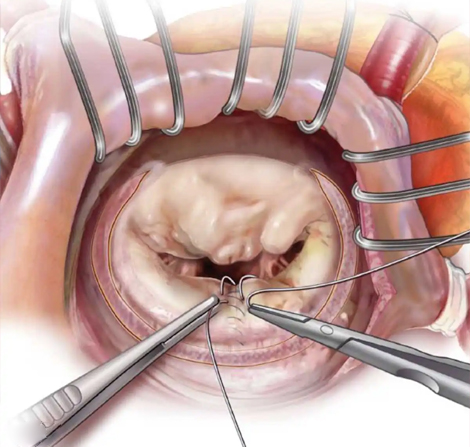
Basically, these are surgeries in which structures that cause loss of function in the mitral valve are corrected. In these surgeries, a heart-lung machine is used and the heart is stopped. The mitral valve is accessed, damaged parts are removed, and remaining tissues are sutured. In addition, new chordae are created or leaflets are repaired with patches to perform necessary interventions. A ring is frequently placed around the valve to complete the surgery. During the operation, it is essential to verify whether the repair was successful. If the repair is inadequate, additional interventions may be performed or valve replacement may be needed. These surgeries can be performed through normal front incisions or small side incisions.
✓What are the Advantages of Mitral Valve Repair?
-The most important advantage of mitral valve repair is that the patient's own valve tissue continues to exist. Thus, valve functions closest to normal are preserved.
-Except for the first 3-6 months after surgery, there is no need to use blood thinners.
-Patients are protected from problems that may arise with artificial valves (deterioration in artificial valve functions as a result of tissue formation around the valve, risk of deformation in tissue valves, etc.) or problems caused by blood thinner medications (clot formation on the valve due to insufficient medication dose or serious bleeding due to excessive dose).
-Since the patient's own valve tissue is preserved, the patient is more resistant to infections compared to artificial valves.
-As demonstrated in conducted studies, patients benefit more in the long term with valve repair.
✓Who is Mitral Valve Repair Applied to?
Not every patient is suitable for mitral valve repair. Some mitral valves may be deformed beyond repair. Especially in those with rheumatic valve disease, repair outcomes are worse, so the chance of repair is lower in these types of patients. Often, in advanced ages, conditions where the mitral valve has degenerated may be more suitable for repair. Each patient must be carefully evaluated.
✓Heart Valve Repair Surgical Methods
Valve repair is generally a preferred option instead of replacing the valve in patients with heart valve disease. Here are the most common repair methods:
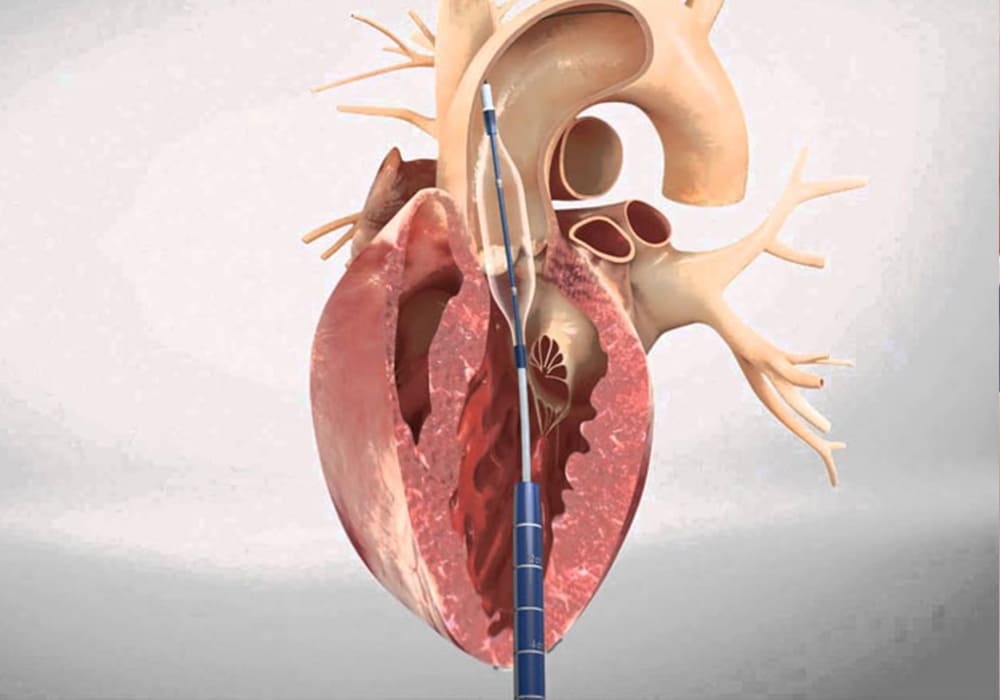
Valvotomy: It is a procedure performed to widen stenotic valves. It is performed by cutting the adhesions in the valve leaflet that cause the stenosis. It is especially frequently preferred in cases of mitral valve narrowing (mitral stenosis).
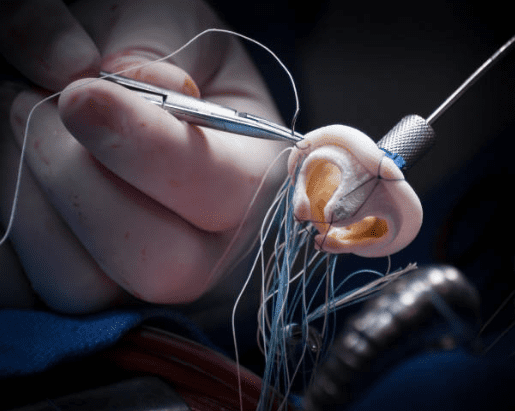
Annuloplasty: If insufficiency develops as a result of valve ring enlargement, it helps the valve regain function by tightening the ring. A type of ring is placed and the valve is reshaped to close properly.
Chordal Repair: In the mitral valve, chordae structures that attach the leaflets to the papillary muscles/ventricles may weaken, stretch, or rupture over time. In this case, the chordae are repaired or repositioned.
Valvuloplasty: A repair method that can be performed using the patient's own cardiac membrane in cases of leaflet widening, tearing, or narrowing of the valve leaflet.
Advantages of Heart Valve Repair :: Heart valve repair has many advantages. Among these are preservation of the natural valve, lower infection risk, and generally a faster recovery period. Additionally, the long-term success of repaired valves is usually better than that of replaced valves. Especially for young and active patients, repair surgery may be a better option.
✓Long-term Results of Heart Valve Repair
After heart valve repair, patients generally have a better quality of life. Successful repair of the valve restores heart functions to their normal state and helps prevent serious complications such as heart failure.
Research shows that 85% of patients after valve repair live without complications for 10 years. However, this rate is directly related to the patient's general health status and their adaptation to lifestyle changes after surgery.
The recovery process after heart valve repair varies depending on the patient's general health condition, age, and the type of procedure performed. After open-heart surgery, a recovery period of 4-6 weeks is generally required. Following minimally invasive procedures, this period may be 2-4 weeks.
Important points to be observed in post-operative patient care are as follows:
Medications: It is important to use medications recommended by the doctor regularly. Some patients may use blood-thinning medications for a short period.
Exercise and Physical Activity: Light exercises can be started after surgery. Regular walks are recommended for strengthening the heart.
Diet: A diet that supports heart health, low in fat and salt should be followed.
Follow-up Visits: Regularly visiting the doctor to monitor the condition of the valve and the heart's performance is of critical importance.
What are the mitral valve repair methods?
There are various methods of mitral valve repair. The basis of all these methods is to repair the structure that causes the defect in the mitral valve. There are different components that make up the mitral valve. There are two small leaflets in the mitral valve. In the procedures performed, these leaflets are most often intervened upon. Enlarged portions are cut and repaired, or if they are small, the leaflets are enlarged with patches. If there is a tear or stretching in the thread-like structures beneath the leaflets, new chordae are created or these are repaired. While all these procedures are performed in some patients, in others, only one procedure may be sufficient. Generally, after each repair, a ring is placed around the mitral valve to complete the repair.
How long does the mitral valve repair procedure take?
The duration of the procedure varies depending on the procedures to be performed and the patient's condition. Generally, these surgeries take approximately 3 hours on average.
What is the frequency of mitral valve diseases?
Mitral valve disease is seen in approximately 10 percent of the patient population above 5 years of age.
How many days does the patient stay in the hospital after mitral valve repair surgery?
After mitral valve repair surgery, an average hospital stay of 5 to 7 days is required. While it can be shorter, if complications occur, a much longer hospital stay may be necessary.
When can the patient return to daily life after mitral valve repair surgery?
While this period varies from patient to patient, frequently patients are able to return to their daily lives within one month. This period is quite variable.
Is mitral valve repair surgery a reliable procedure?
Yes, mitral valve repair surgery is a reliable procedure. Every surgery carries a certain risk; no operation can be said to have zero risk. It would be incorrect to say that there is no risk for mitral valve repair, but these surgeries can be performed with very low risks. Conversely, if patients who should have mitral valve surgery do not undergo surgery or delay the operation, the risk ratio they face increases further.
What are the differences between mitral valve repair and mitral valve replacement procedures?
The most fundamental difference is that in patients who undergo repair, the patient's own valve tissue is preserved. If the mitral valve is replaced, artificial valves are implanted in its place. These artificial valves have structures different from normal valve tissue, and an abnormal structure is implanted. In patients who undergo repair, the structure closest to normal is attempted to be preserved.