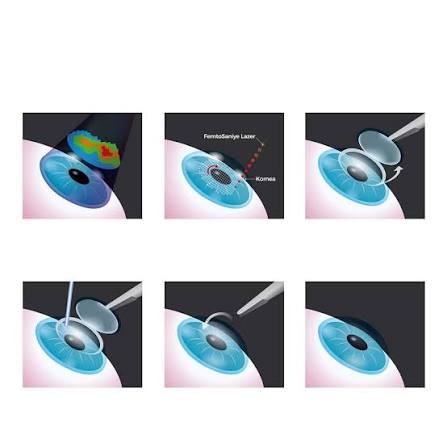
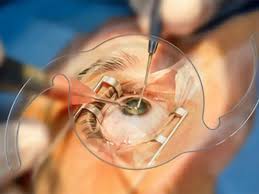
Cataract is the clouding of the natural lens inside the eye due to loss of transparency. The most common symptoms are blurred vision, fading colors, and glare in bright lights. The definitive treatment is surgical implantation of an artificial lens.
✓What is Cataract?
Although cataracts are often seen as a result of aging, they can develop from birth and from various external factors acquired later. Cataracts can occur in both eyes, but do not spread from one eye to the other. The speed of disease progression is often related to its cause of onset. Cataracts that develop following eye trauma and eye surgery progress faster compared to age-related cataracts. The main cause of vision loss resulting from cataracts is that light entering the eye from outside does not refract properly as it passes through the lens that has lost its transparency. As a result, the image does not focus on the retina as it should and scatters inside the eye. Although cataracts cause severe vision loss, they do not cause blindness.
✓What are the Symptoms of Cataracts?
Cataracts generally progress slowly and symptoms may not be noticed at the beginning. However, as the disease progresses, the following symptoms may appear:
Blurry or Hazy Vision: This is the most common symptom. Patients often describe feeling as if they are 'looking through a frosted glass window'.
Fading of Colors: Colors may appear less vibrant, yellowed, or pale.
Light Sensitivity and Glare: Especially when driving at night, oncoming headlights or bright sunlight can cause bothersome glare and halos around lights.
Double Vision in One Eye: Even when looking with one eye, objects may appear double or ghostly.
Frequent Changes in Glasses Prescription: As the cataract progresses, the eye's refractive power changes, which may require frequent updates to glasses or lens prescriptions.
Difficulty with Night Vision: Vision quality noticeably decreases in dim light or at night.
Reading Difficulty: Requiring brighter light for near vision.
How Does a Person with Cataracts See? :: When we think of our eye's components like those of a camera, we can think of cataracts as fogging of the lens that provides focus in front of the camera. Loss of color vibrancy, blurred vision, discomfort from bright lights at night, and failure to see details in dim and dark environments are among the vision disturbances that patients experience.
✓What Causes Cataracts?
The most common cause of cataracts is natural changes that occur in the eye lens with age. The structure of proteins in the lens changes over time, which can create cloudy areas.
✓How are Cataracts Treated?
Surgery is the treatment that eliminates cataracts. Glasses changes or brighter lighting can help manage vision complaints for a time in the early stages; however, it does not eliminate the cataract.
✓When is Cataract Surgery Considered?
Cataract surgery is a procedure in which the patient's natural intraocular lens is removed through various surgical methods and replaced with an artificial intraocular lens. It is a microsurgical operation.
✓Phaco Method and Intraocular Lens
Phacoemulsification (Phaco) is a sutureless technique considered the gold standard in modern cataract surgery. In this method, through a very small incision of approximately 2 millimeters made at the edge of the eye, a device emitting high-frequency ultrasound (sound waves) dissolves the cataractous lens inside the eye and it is suctioned and cleaned. An artificial intraocular lens (IOL) selected according to the patient's visual needs is placed in the cleaned natural lens pocket.
✓Monofocal (Single Focus) Lenses
These lenses are designed to sharpen vision at a single distance (usually far). After surgery, patients can see clearly at a distance without glasses, but require glasses for near activities such as reading.
✓Multifocal (Multi-Focus) and Trifocal (Three-Focus) Lenses
Also known as 'smart lenses', these lenses aim to provide clear vision at far, intermediate, and near distances, minimizing patients' dependence on glasses.
✓Congenital (Congenital) Cataracts and the Importance of Early Diagnosis
Congenital (congenital) cataracts occur when a baby has lens cloudiness in one or both eyes at birth. This condition is of urgent and critical importance because it can prevent normal development of the baby's vision system. It can be detected by symptoms such as a white spot (leukocoria) in the pupil or strabismus. If not diagnosed and treated early, it can lead to the brain not learning to process images from that eye and consequently result in permanent vision deficiency (lazy eye or amblyopia). For this reason, infant eye examinations performed after birth and immediate consultation with an ophthalmologist in case of any suspicion are of vital importance. Treatment usually involves surgical intervention performed within the first few months of life.
✓Is the Patient Hospitalized After Cataract Surgery?
Cataract surgery is mostly performed as day surgery. The patient is monitored for a period after surgery and is generally discharged the same day if no problems are observed. The follow-up plan may change in special health conditions.
Cataract surgery is mostly performed as an outpatient procedure, and patients can be discharged on the same day after necessary examinations. Following surgery, the patient is monitored in the recovery and observation area for a period of time. The timing of discharge may vary depending on the anesthesia used, the patient's general condition, and the post-operative evaluation of the eye.
Vision may initially be blurry after surgery. Although vision begins to improve within a few days for most people, complete healing of the eye and stabilization of vision may take several weeks. The recovery period varies from person to person depending on the density of the cataract, the eye's structure, the intraocular lens used, and any accompanying retinal, corneal, or optic nerve diseases.
In the first days, mild irritation, foreign body sensation, tearing, light sensitivity, temporary blurriness, or mild redness may be observed. These complaints are expected to decrease over time. Some people may perceive colors as brighter and more vivid after surgery; this is because the natural lens that had yellowed due to the cataract is removed and replaced with a transparent artificial intraocular lens.
After surgery, prescribed eye drops should be used as directed, and follow-up examinations should not be missed. If sudden vision loss, progressively increasing redness, persistent severe pain, light flashes, or newly onset intense floaters are observed, the eye doctor should be contacted without delay.
Does Cataract Cause Blindness?
Yes. Untreated and progressive cataract can lead to gradual decrease in vision and, in advanced stages, severe vision loss or even blindness. However, vision loss due to cataract can usually be treated with surgery. In Cataract Surgery, the natural lens of the eye that has lost its transparency is removed and replaced with an artificial intraocular lens.When cataract begins to affect daily life due to vision impairment, an eye examination should not be delayed.
Does Cataract Cause Pain?
Cataract usually does not cause pain. The most common symptoms are; gradually progressive blurred vision, fading of colors, halos around lights, glare and decreased night vision. If there is sudden or severe pain in the eye, noticeable redness, sudden vision loss or flashing lights, these symptoms should not be directly attributed to cataract. Since it may be a sign of another eye disease, an eye doctor should be consulted shortly.
Is Cataract Visible from the Outside?
Cataract in its initial and intermediate stages is usually not noticeable when viewed from the outside. Cataract develops not on the outer surface of the eye, but in the natural lens located behind the pupil. Definitive diagnosis is made through vision assessment performed by an eye doctor and special examination equipment called a biomicroscope. In some very advanced types of cataract, a grayish or white appearance may be noticed behind the pupil. However, it is not correct to wait for it to become visible from the outside; regular eye examinations are important for early diagnosis.
Does Cataract Occur in Both Eyes at the Same Time?
Cataract can develop in one eye or both eyes. Age-related cataract affects both eyes in most people; however, it generally does not progress at the same rate and to the same degree in both eyes. Cataract in one eye may start earlier or be at a more advanced stage than in the other. Cataract does not spread or transmit from one eye to the other. If surgery is needed in both eyes, procedures are usually planned on different days, taking into account the healing process of the eyes.
When is Cataract Surgery Performed?
For Cataract Surgery, one does not simply wait for the cataract to reach a certain level or "mature." The decision to operate is based on how much the blurred vision affects activities such as reading, driving, working, watching television, recognizing faces, and performing daily tasks. If vision does not improve adequately despite changing eyeglass prescription, or if glare and night vision problems reduce quality of life, Cataract Surgery may be considered. There is no strict age limit for surgery; the right time is determined after a detailed eye examination, evaluating the patient's vision needs and eye health together.
How Long Does Cataract Surgery Take?
The surgical phase of Cataract Surgery can be completed in approximately 20–45 minutes in most patients. However, when the time for eye preparation, anesthesia application, and post-operative observation are added, the total time spent in the hospital may be longer.
Is Cataract Surgery Risky?
Although Cataract Surgery is a commonly performed surgical procedure, it carries certain risks like any surgery. The likelihood of complications may vary depending on the eye's structure, the density of the cataract, accompanying eye diseases, previous surgeries or traumas, and the person's general health status.
Is Hospitalization Required for Cataract Surgery?
Cataract Surgery is usually performed on an outpatient basis. The patient is monitored for a period after surgery and is usually discharged on the same day when the eye's condition is appropriate; the follow-up plan may vary in special health conditions.
Is Cataract Surgery Performed with Anesthesia?
Cataract Surgery is usually performed while the patient is awake, using numbing drops or local anesthesia applied around the eye. If necessary, medications may be given to help the patient relax; general anesthesia may be considered in selected cases.
Is Cataract Surgery on Both Eyes Performed Simultaneously?
When cataract is present in both eyes, each eye is evaluated separately. Operations are usually planned at different times; the interval between the two procedures is determined based on the condition of the eyes, the healing of the first eye, and the surgeon's assessment.
What are the Side Effects of Cataract Surgery?
After Cataract Surgery, mild irritation, tearing, and temporary blurriness are normal in the first few days. Rarely, side effects and complications such as infection, changes in intraocular pressure, corneal or retinal edema may occur.
What precautions should be taken after Cataract Surgery?
In the first days after Cataract Surgery, not rubbing the eye, avoiding contact with water and soap, using prescribed drops regularly, and not sleeping on the operated eye side are vital to prevent infection risk and accelerate healing.
Do not rub or scratch the eye at all. For the first 1 week, do not let water, shampoo, and soap touch the eye. When bathing, wash by tilting your head back. Stay away from environments such as the sea, pool, and sauna for at least 1 month. Do not apply makeup around the eye for the first few weeks.
Do not sleep on the operated eye. Avoid lifting heavy loads in the first weeks. Avoid sudden movements, bending forward, and severe straining/coughing.