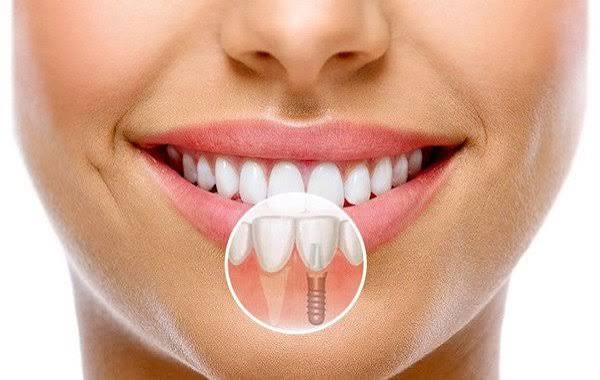
Dental implants are artificial roots placed in the jawbone to replace missing teeth. They are used to restore tooth function, improve aesthetic appearance, and prevent bone resorption in the jawbone.
✓What is an Implant and Why is it Used?
Contrary to what is believed, a missing tooth does not only cause chewing problems or aesthetic concerns. In addition, deterioration of jaw structure, misalignment, gum diseases, and stomach problems can also arise as a result of missing teeth. Those who do not want to face such problems can have an Implant applied in place of the empty tooth roots.
✓An Implant is an artificial material placed in place of the tooth root. An Implant, which looks like a screw and is made of titanium, is easily accepted by the body since it does not carry a living organism. There is no situation where the body would reject the artificially added tooth root. People who have lost their teeth for various reasons are largely relieved of psychological problems through this application.
✓What are the Stages of Implant Treatments?
The Implant treatment process begins either on the physician's recommendation or at the patient's own request. In the first stage, the condition of the teeth is examined by the physician. At this stage, utilizing dental tomography technology plays an important role in ensuring that the Implant application gives a successful result. Bone thickness, cyst formation, or overlapping teeth, which cannot be detected with two-dimensional devices, are easily understood through tomography. The measurements of the Implant are also determined most accurately as a result of tomography. Thus, the Implant is suitable for the patient's needs and an aesthetic appearance emerges when the restoration phase is completed.
✓Placement of the Implant
Implant surgery is performed under local or general anesthesia. The area where the specially prepared Implant will be applied is drilled to the appropriate depth. After the material placed there is screwed in, it is covered with gum tissue and stitched. In the next phase, it is necessary to wait for bone integration.
✓The process of Implant bone integration is 3 months. If advanced surgical techniques (sinus lift, ridge split, bone augmentation, etc.) have been applied, the time required for bone grafts applied to the area to fuse with the bone is longer. Depending on the technique applied and the bone graft used, this period can be 4-8 months. During the Implant's bone integration process, the patient's attention to oral hygiene and limiting tobacco use are important for the operation site not to become infected and for the integration process to be completed successfully.
✓The integration period can last between 2 months and 6 months depending on the patient's bone structure, bad habits, or attention to oral health. During this process, the physician performs periodic checks and, if necessary, utilizes dental tomography technology to monitor the condition of the Implant.
✓Tooth extraction and Implant can be performed at the same time. In patients who have had Implant applied simultaneously, the Implant socket also needs to be prepared along with the drilling procedure.
✓Prosthesis Placement
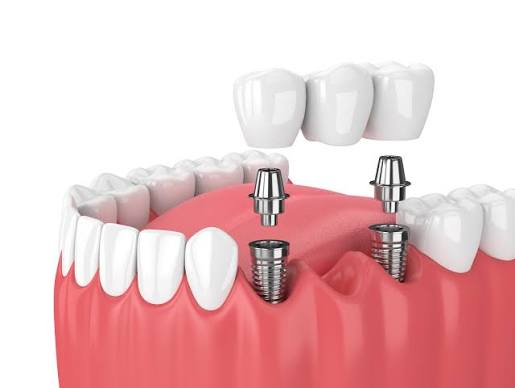
After the necessary waiting periods are completed, the phase of prosthesis over the Implant is entered. Before taking measurements, X-rays are taken to check the Implants, healing abutments are placed, and measurements are taken after 3-7 days. A healing abutment is placed for the measurement procedure. This abutment is not removed during a period varying between 3 to 7 days. When this period is completed, measurements are taken and prosthesis preparation begins. Depending on the material chosen for the prosthesis phases (metal-supported porcelain or zirconium), metal or zirconium try-in is done first. Then porcelain try-in is performed. After that, all deficiencies are corrected and polishing and bonding procedures are performed. After the try-in examination, the prosthesis is placed in the mouth.
✓Fixed Prostheses
Those who have fixed prostheses made can use their new prosthesis as comfortably as they use their own tooth through applications performed by a specialist physician with the help of dental tomography. For your new teeth to display an aesthetic appearance and not cause you discomfort in your mouth, you should follow all recommendations given by your physician and undergo any additional operations recommended when necessary. Through this, the prosthesis you will use will be no different from your own tooth.
✓Removable Prostheses
Removable dental prosthesis can be easily put on and taken off by the patient. After Implant, whether a removable or fixed prosthesis will be made should be decided together with the physician. Generally, removable prostheses are preferred in situations where bone loss is high and this loss can lead to different problems, or if the relationship between the jaws does not allow fixed prosthesis to be made. Removable prostheses, like fixed prostheses, offer quite comfortable use. Patients who have had removable prosthesis made over Implant should remove and clean their prostheses every day. Prostheses should not be worn while sleeping at night.
✓All On Four Implant Technique
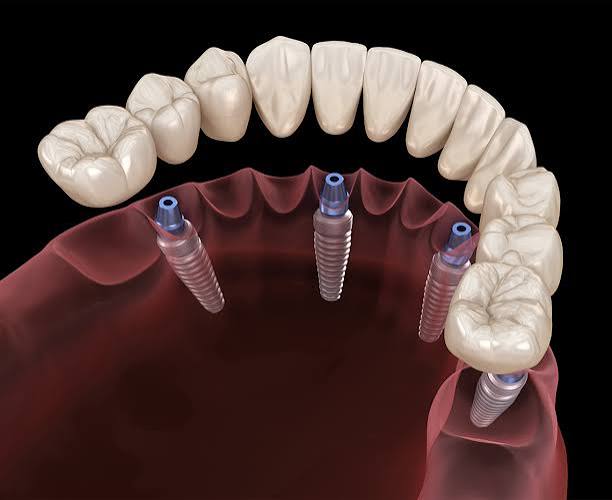
In patients who have lost all their teeth for various reasons, the technique that allows both the Implant and prosthesis to be placed on the same day is called All On Four. Those who cannot use removable dental prosthesis or experience stomach nausea problems due to removable prostheses should benefit from the advantages of this technique. For patients with advanced bone loss and elderly patients, specialist dentists recommend the All On Four method.
✓During All On Four Implant, there is no need for advanced surgical procedures to the sinus cavities located in the back of the upper jaw. At the same time, All On Four is preferred in the lower jaw to avoid the mandibular nerve. Patients who benefit from this technique need to have their prosthesis cleaned once a year. During cleaning, the prostheses are removed from their place.
The most important factor determining the lifespan of an implant is post-operative care and regular check-ups.
First days after surgery
Apply cold compress for the first 24 hours; swelling and bruising will decrease rapidly.
Avoid very hot food/drinks and hot baths in the first days.
Use antiseptic rinse and medications recommended by your doctor regularly.
Gently clean the sutured area with a soft-bristled toothbrush.
Long-term implant care
Make brushing twice daily and flossing / interdental brush use a habit.
Quit smoking or reduce it to a minimum — smoking is the number one reason for implant loss.
Avoid excessively hard foods and teeth grinding (bruxism); use a night guard if necessary.
Have dental check-ups and professional cleaning every 6 months.
Arrival Day
Meeting with transfer at the airport and transfer to the hotel.
Day 1
Meeting with a patient assistant at the hotel and transfer to the hospital for surgery.
Day 2
Hospital check-up and discharge procedures and transfer to the hotel.
Day 3 and 4
Free Time
Day 5
Meeting with a patient assistant at the hotel and check-up at the doctor's clinic.
Day 6
Checkout procedures from the hotel and transfer to the airport.
Is implant treatment painful?
No. Since the procedure is performed under local anesthesia, no pain is felt during the operation. Any mild soreness and swelling that may occur afterward can be managed with painkillers recommended by your doctor and cold compress for a few days.
How long does implant treatment take?
Standard treatment takes an average of 2-6 months. Implant integration with bone takes 2-3 months in the lower jaw and 3-6 months in the upper jaw. If bone grafting or sinus lifting is needed, the process may extend up to 12 months; in suitable cases, a temporary tooth can be placed the same day with immediate loading.
How long does an implant last?
With proper oral care and regular check-ups, implants can be used for a lifetime. Titanium implants have a long-term success rate above 95%. Smoking, poor hygiene, and uncontrolled systemic diseases can shorten this period.
Who cannot have implants?
Uncontrolled diabetes, advanced bone loss, a recent history of radiotherapy/chemotherapy, and pregnancy can be obstacles to implants. Controlled chronic diseases (diabetes, hypertension, thyroid) are not obstacles with doctor's approval.
What determines implant prices?
Price is determined by; implant brand (domestic/imported), abutment material (zirconia/porcelain), number of missing teeth, additional procedures like bone grafting, doctor's experience, and the city where the clinic is located. For exact pricing, a personalized plan is needed after examination and imaging.
Implant or bridge—which is better?
Implant is considered the gold standard because it does not require cutting down healthy adjacent teeth and prevents jaw bone loss. In a bridge, the adjacent healthy teeth are reduced. In the long term, implants are a more durable and tooth-friendly solution.
Is same-day implant (immediate loading) possible?
Yes. In patients with suitable bone density, an implant can be placed and a temporary tooth attached in the same session as tooth extraction. However, this method is not suitable for every patient; it depends on evaluation by tomography.
Can the body reject an implant?
Since titanium and zirconia are biocompatible, there is no "rejection" in the classical sense. Rare implant loss is usually due to infection, smoking, or incomplete osseointegration, with a rate below 5%.